EP 35 - Serving Shoulder to Shoulder
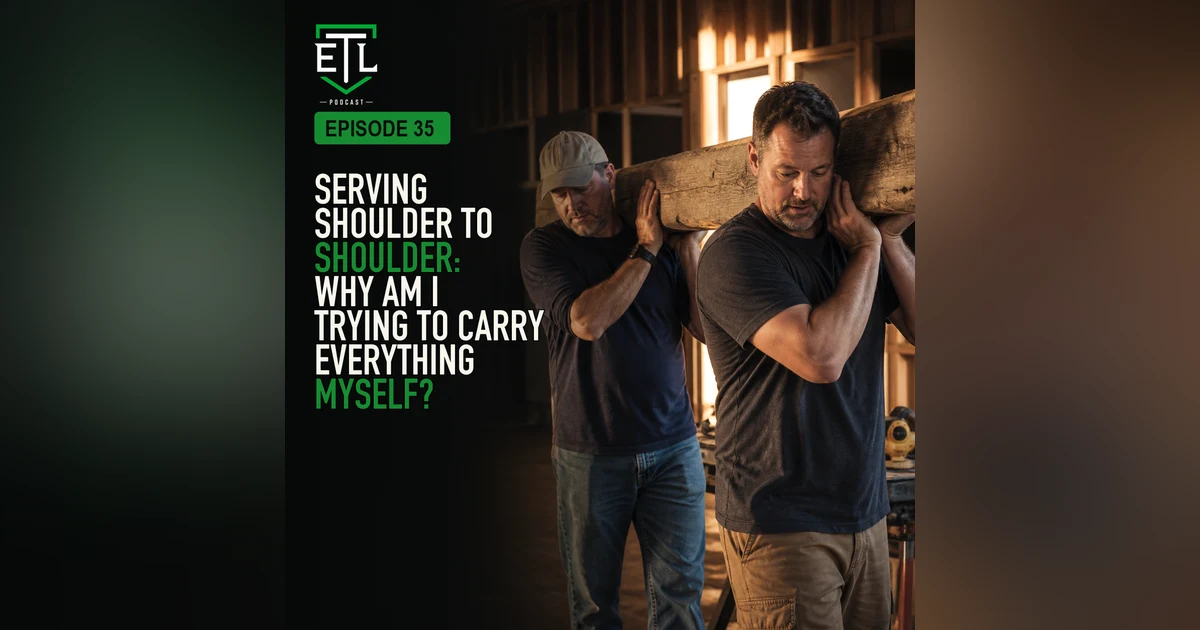
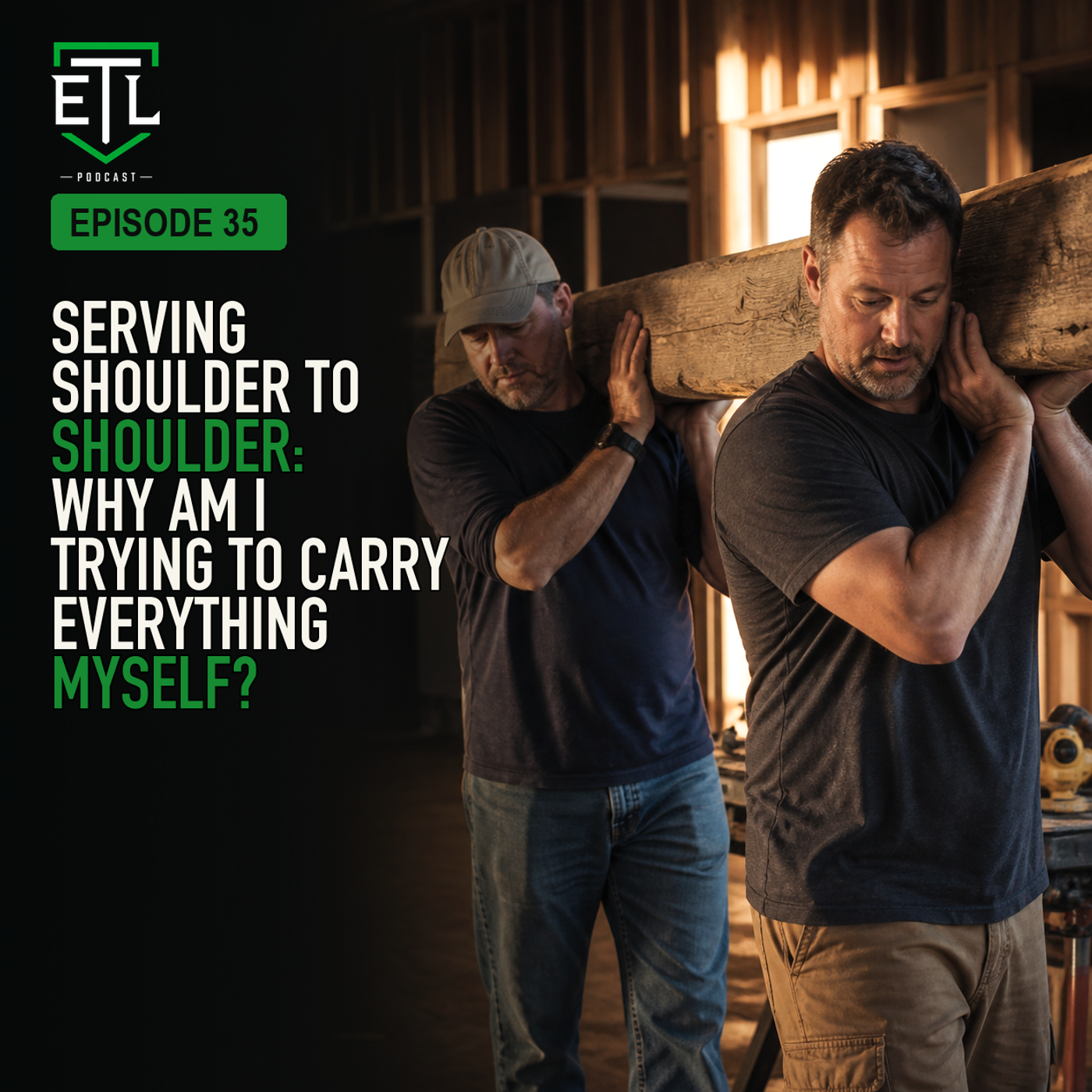


Why do dependable men keep carrying work pressure, family responsibility, ministry needs, and private battles alone?
Episode 35 opens Nehemiah 4:6 to distinguish personal responsibility from self-sufficiency. Corey shows how trustworthy brotherhood, clear roles, concrete help, and wise boundaries equip Christian men to serve shoulder to shoulder without abandoning their own assignment.
Chapters
00:00 Why Men Carry Everything Alone
01:31 Nehemiah 4:6: Biblical Teamwork
04:05 Responsibility vs. Self-Sufficiency
06:12 Pride, Fear, and Male Isolation
08:12 Why Christian Men Need Brotherhood
10:33 Sharing Burdens Under Pressure
12:23 Biblical Brotherhood: Give and Receive Help
14:20 How to Ask a Brother for Help
16:01 Jesus Carries What We Cannot
Equipped to Lead Podcast: Some of us are carrying work pressure, family responsibility, ministry needs, and private battles with nobody close enough to know the real weight. We call that strength, but Nehemiah 4 shows a wall rising because every man carried his part beside somebody else. Today, we'll learn how to stop isolating, keep our responsibility, and invite trustworthy brothers to stand shoulder to shoulder with us. Welcome to the Equip to Lead Podcast. I'm Corey Couture, and this podcast exists to help men lead with strength, serve with humility, and love like Christ. Our episode today is titled Serving Shoulder to Shoulder and asking the question: why am I trying to carry everything myself? A lot of men are not avoiding responsibility. We are drowning in it. We are carrying what happens at work, what needs attention at home, and what somebody asked us to do at church, what our children need. What our aging parents need, and what we are afraid to say out loud. Then we smile, answer the next message, and tell everybody that we are good. By the end of this episode, we will see why God's work in Nehemiah advanced through shared responsibility, how pride and fear turned dependable men into isolated men, and how to invite one trustworthy brother into a real burden without dropping our assignment on him. Our primary verse is Nehemiah four six, but the names and scenes around it help us understand what shoulder to shoulder service actually looks like. Nehemiah chapter four verse one through six says, Now it came about that when Sambalat heard that we were rebuilding the wall, he became furious and very angry and mocked the Jews. He spoke in the presence of his brothers and the wealthy men of Samaria and said, What are these feeble Jews doing? Are they going to restore it for themselves? Can they offer sacrifices? Can they finish in a day? Can they revive the stones from the dusty rubble, even the burned ones? Now Tobiah the Ammonite who was near him and he said, Even what they are building, if a fox should jump on it, he would break their stone wall down. Hear, O our God, how we are despised. Return their reproach on their own heads and give them up for plunder in a land of captivity. Do not forgive their iniquity and let not their sin be blotted out before you, for they have demoralized the builders. So we built the wall and the whole wall was joined together to half its height, for the people had a mind to work. Nehemiah says the wall was joined together up to half its height because the people had a mind to work. That sentence lands in the middle of opposition. Sambalat mocked them, Tobiah even said a fox could break down what they were building. The pressure was public, insulting, and designed to make the people quit. But Nehemiah prayed and the people kept building. But notice the subject of the verse. The people had a mind to work. Nehemiah carried real leadership responsibility. He prayed, he planned, organized, corrected, encouraged, and stayed alert. Still, he He did not build the wall by himself. Chapter three gives us name after name. Priests repaired the gate, goldsmiths and perfume makers worked on the wall. Rulers, families, merchants, and people from nearby towns took sections. Some had construction experience, some probably did not. They brought different skills and different social positions to one mission. The wall rose because willing people accepted nearby responsibility. Each section mattered, each worker's faithfulness strengthened the whole city. This gives us a central truth for the episode. Godly strength does not prove it can carry everything. It knows what must be carried together. That is not an argument for laziness. The people worked. It's not an argument for avoiding leadership. Nehemiah led. It is an argument against the proud fantasy that faithful leadership means one man must become the whole body. The first distinction we need is between personal responsibility and self sufficiency. Personal responsibility says, I will answer to God for the assignment He has given me. Self sufficiency says, if I were really strong, I would not need anybody while I do it. Scripture calls us to responsibility. We work, keep our word, provide as we are able, care for people entrusted to us, confess our sin, and And make the hard phone call instead of hoping somebody else cleans up our mess. But Scripture never turns independence into a spiritual virtue. 1 Corinthians 12 says the church is one body with many members. The eye cannot tell the hand, I do not need you. Every part has a function, and every part depends on Christ, the head. Imagine a hand trying to prove its maturity by separating from the arm. That is not strength, it is disconnection. We can do the same thing in ordinary life. A manager keeps every decision because training somebody takes time. A father believes providing money means he cannot admit how anxious he feels. A ministry leader says yes to every request because he is afraid the work will fail without him. At first, this looks dependable, but over time it creates exhaustion, resentment, weak teams, and relationships where people receive our output but never really know us. Some of us have become the bottleneck in the very work we say we care about. Nothing moves unless we touch it. Nobody grows because we never let them carry a meaningful section. Nehemiah did not abandon responsibility by assigning sections. He fulfilled responsibility by organized shared work. A strong leader does not ask how can I stay necessary to everything? He asked, What has God actually given me? Who has he placed beside me? And how can we be faithful together? So why do we keep carrying things along? Sometimes the honest answer is pride. We like being the man who has the answer. We like being needed. We may tell ourselves nobody else will do it right, but sometimes we have not taught, trusted, or even asked anyone else. Pride also appears when we refuse to receive. Galatians 6 2 tells believers to carry one another's burdens. A few verses later, Paul says each person should carry his own load. Those truths belong together. There are responsibilities another man cannot obey for us. He cannot repent in our place, lead our home in our place, or make our decisions for us. But there are crushing weights we were commanded to help one another bear. If I am always the helper and never willing to be helped, I am not giving my brothers the same opportunity to obey that I want for myself. Fear is another reason. Some men learned early that needs get mocked. Maybe a confidence was repeated. Maybe a church leader minimized a pain. Maybe a friend disappeared when life got complicated. If that happened, caution is understandable. Biblical brotherhood does not mean immediate access for everyone. Trust grows through character, truth, time. And consistency. Look for a man who keeps confidence, receives correction, stays anchored in scripture, and does not need to be the hero and will tell us the truth with compassion. Here is a diagnostic question Do the men closest to us know the real weight or only the version we have already managed? A man may know our favorite team, our work schedule, and our theology while having no idea that our marriage is strained, our anger is growing. Or we are one bad week away from total collapse. We do not need to announce private struggles to a crowd, but secrecy and wisdom are not the same thing. Wisdom chooses trustworthy light, secrecy protects the darkness. Nehemiah 3 can feel like a long list of names until we notice the pattern. People repaired the part in front of them. Some worked near their homes, some repaired gates, some covered long sections. Not every assignment looked the same. That is how healthy brotherhood and healthy teams work. Unity is not uniformity. One brother may bring practical skills. Another asks the question everybody else avoids. One has walked through grief. Another understands budgets. One can sit quietly without trying to fix everything. Another man knows when it's time to call a pastor or a counselor. David's life gives us a similar picture. Jonathan strengthened him as a friend. Nathan confronted him with truth. And other men stood beside him in battle and leadership. No single relationship carried every need. We get into trouble when we expect one friend, â a wife, a pastor, or a small group leader to become the entire support system. That is too much weight for one relationship. It is also possible to ask for the wrong kind of help. We may want somebody to agree with us when we need correction. We may ask a brother to take over a responsibility God is calling us to face. Or we may keep talking about a burden without taking the next obedient step. Serving shoulder to shoulder means the purpose stays clear. We are helping one another become faithful to Christ, not dependent on each other. Suppose a man is overwhelmed by debt. A brother can sit with him, help organize the numbers, pray, and point him toward qualified financial counsel. But the brother cannot practice honesty, restraint, and repayment for him. If a marriage is in crisis, a trusted man can listen, challenge sinful patterns, and help arrange pastoral or professional counseling. He should not become a secret emotional substitute for the marriage or pretend the situation is within his expertise. If temptation is growing, a brother can ask direct questions, remove easy access, pray, and stay close. But accountability is not surveillance. Lasting change depends on repentance, grace, wise action, and the Spirit's work. Different men, different parts, one aim, helping each other walk faithfully under Christ. By Nehemiah 4, the work becomes more dangerous. Half the men work while others stand guard. Builders carry materials with one hand and keep a weapon ready with the other. A trumpeter stays near Nehemiah because the wall is wide and the people are spread out. When the trumpet sounds, everyone knows we're together. Their unity is not a feeling. It has communication, roles, and a response plan. That is useful for men today because vague support often disappears under pressure. We can say call me if you need anything, but the man carrying the burden may not know what to ask. He may be too tired to build a plan for us. Concrete Brotherhood sounds different. I will call you Tuesday night. I can take the children for two hours while you and your wife meet with the counselor. Send me the budget before Friday and we will review it together. If the temptation hits, call before you open the app. Specific help turns good intention into shared work. It also gives us a way to respond when pressure spikes. Who is the man we call before anger becomes a blow up? Who knows the warning signs when we start withdrawing? Who can remind us of the truth when fear makes every problem feel final? A lot of men wait until the wall is on fire before they tell anybody smoke has been building for weeks. We need earlier communication, not constant crisis, not dependence on instant replies. A simple rhythm can be enough. One weekly call, one honest question, one shared prayer, or one clear next step. The point is not to create a complicated men's program. The point is to make brotherhood concrete enough to survive a hard week. Nehemiah's men knew their section, their danger, and the signal that meant gather. What is our plan when the pressure rises? There is one more side to this. We are not only asking who can help us, we are asking whose wall section is beside ours. Ephesians 4 says the body grows as each part does its work, every joint supplies something. Mature brotherhood is mutual. Sometimes we notice a brother getting quiet, missing church, snapping at people, or working every hour available. We do not need to diagnose him from a distance. We can move closer and ask one honest question. You do not seem like yourself. What is the weight right now? Then we listen. We do not immediately compare stories or preach a speech or promise we can fix it. We try to understand what he is carrying and what kind of help is faithful. Maybe he needs prayer. Maybe he needs a meal or a ride. Maybe he needs someone to confront him because the burden is partly the result of hidden sin. Maybe he needs us to sit beside him while he contacts a counselor, a doctor, attorney, or a financial professional, or the pastor. Real brotherhood has tenderness and backbone. It can help carry a load and it can refuse to help a man hide from responsibility. This is especially important for leaders. If we lead a team, Church ministry, family, or a group of men, our example teaches people what strength looks like. If we never admit need, we train everyone around us to perform. If we receive help with humility, we make honesty safer. Nehemiah stood with the people under pressure. He did not direct work from a protected distance. Biblical leadership is not merely over people. It is among them, telling the truth, carrying responsibility, and sharing the hardship. The goal is not a circle of men endlessly discussing ourselves. The goal is men strengthened in Christ so we can serve our homes, churches, workplaces, and communities with steadiness and love. Let me turn this into one practical action for the week. Invite one brother into one burden. First, name the actual burden. Use a plain sentence. I am bringing work anger home. I am afraid about our finances. I am losing the fight with this temptation. I do not know how to care for my dad and keep everything else moving. And then second, choose a trustworthy man. Do not choose only the person most likely to agree with you. Choose someone mature enough to keep confidence, to pray, tell the truth, and point us toward appropriate help. Third, make one concrete request. Ask for a weekly check-in, help with one task. Prayer before a conversation, a ride to an appointment, or help finding qualified support. And then fourth, keep your responsibility. Do not hand him the whole wall. Agree on the part he can help carry and the next step that still belongs to you. We can say, I need to tell you what is really happening. I am not asking you to fix it. Would you pray with me and call me Thursday after I have made this appointment? That is clear, it is humble, it gives brotherhood something real to do. If nobody trustworthy comes to mind, that is not a reason for shame. It is a signal to begin building. Join a men's group, serve consistently, and meet with a pastor or mature believer and let trust grow through time and shared obedience. This practice cannot guarantee that every person responds well. It does not remove the need for boundaries or professional care, but it moves us from private strain toward the kind of connected faithfulness scripture describes. The deepest burden in our lives could not be divided among a group of good men. Our sin separated us from God. No amount of teamwork, discipline, vulnerability, or service could reconcile us to him. Jesus carried what only Jesus could carry. He lived without sin, went to the cross in our place, bore judgment that we deserved, and rose from the grave. We are not saved because we finally became honest enough or connected enough to We are saved by grace through faith in Christ. And the Savior who carries our sin brings us into his body. Grace does not leave us alone. The Holy Spirit gives gifts to his people, joins us together, and teaches us to confess, forgive, serve, correct, encourage, and bear burdens and love. That means we can stop proving ourselves, we can admit that we need help without losing our identity. Our standing with God rests on Christ. Not on our ability to keep every plate spinning. We can also serve without becoming a savior. We are brothers, not messiahs. We help carry what love gives us, and we keep pointing one another to the one who holds us all. When pride says handle it alone, grace says you have nothing left to prove. When fear says nobody can be trusted, wisdom says move carefully toward faithful light. When exhaustion says just keep going, Brotherhood says, let us carry this section together. Guys, what is the real weight right now? Not the polished answer, not the responsibility everybody can see. What burden is getting heavier because nobody trustworthy knows it is there? Name it, choose one brother, make one concrete request, then keep walking in the responsibility God has given you. Godly strength does not prove it can carry everything. It knows what must be carried together. And as we receive help, let us look to the men beside us. Ask the honest question, show up for the hard conversation, carry the practical part you can carry, and point each other back to Christ. We are not called to be the whole wall. We are called to be faithful in our section, alert under pressure, and join to the people God has placed beside us. Lead with strength, serve with humility, love like Christ, be strong and lead well. Let's pray. Father, thank you that Jesus carried the burden of our sin and brought us into your family. Forgive us for our pride, fear, and isolation. Show us what responsibility belongs to us and what weight should be shared. Give us trustworthy brothers. Make us trustworthy brothers, and help us take one honest step into the light this week. In Jesus' name. Amen.


